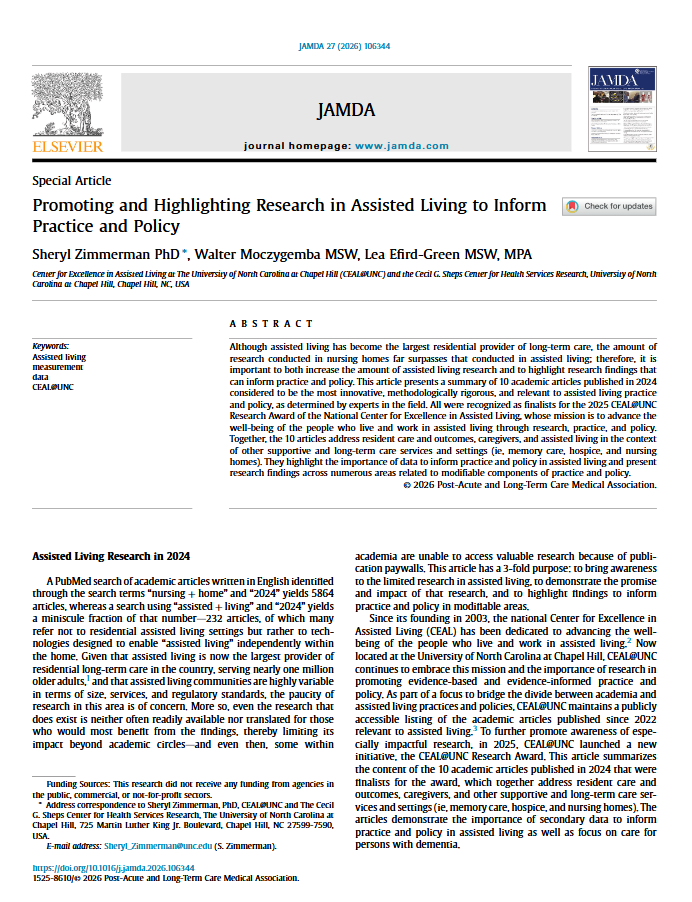
Background: In the United States, nearly 1 million older adults reside in assisted living facilities, which aim to provide support for safe, autonomous living. However, low-income residents, especially those in Medicaid-supported facilities, experience unmet medical and social complex care needs and limited serious illness communication due to limited resources.
Objective: The objective of this study was to explore the complex care needs and serious illness communication challenges experienced by low-income older adults in Medicaid-supported assisted living.
Methods: A qualitative secondary framework analysis was conducted on data from a parent qualitative study involving 17 residents aged 60 and older with serious illnesses at a Medicaid-supported facility in New York City. Residents completed the Edmonton Symptom Assessment Scale and participated in semistructured interviews. This study was guided by the National Consensus Project for Quality Palliative Care, focusing on the residents’ experiences, complex care needs, and communication within palliative care domains.
Results: Residents were predominantly Black and Hispanic, with nearly one-third having a history of homelessness or shelter use, and they experienced a high symptom burden. Four key themes emerged: (1) compromised quality of life; (2) high symptom burden and limited access to care, with residents reporting pain, fatigue, and emotional distress; (3) communication gaps while navigating health care, resulting in frustration and feelings of being unheard; and (4) fragmented care coordination, which exacerbated feelings of isolation and mistrust in the health care system.
Conclusion: The findings reveal that Medicaid-supported assisted living residents encounter substantial challenges related to complex care needs and serious illness communication. There is an urgent need for community-based interventions to enhance care access, improve symptom management, and facilitate effective communication, ultimately supporting the residents’ quality of life and health outcomes. Enhanced training for staff and policy changes are key to addressing these systemic barriers to care.
Center for Excellence in Assisted Living CEAL@UNC
Advancing the well-being of the people who live and work in assisted living through research, practice, and policy.
Footer
Contact

Featured Resource