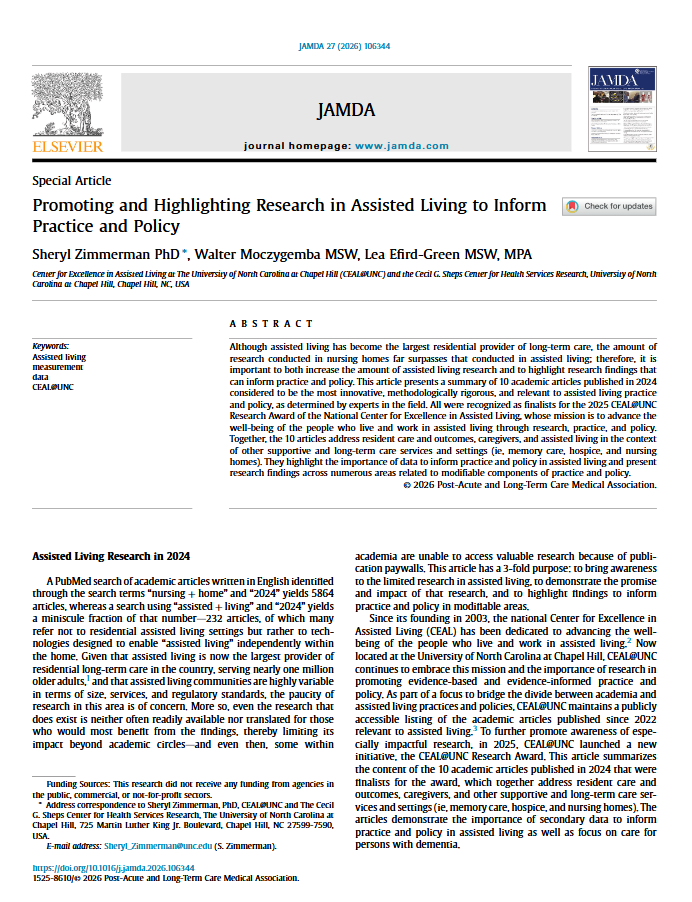
Residential care communities (RCCs) employ nearly 660,000 personal care aides but few studies have examined personal care aide staffing nationwide. This study examines RCC characteristics associated with aide hours per resident day. We used the 2022 National Post-acute and Long-term Care Study to analyze variables of interest without missing data (n = 518) and produced weighted regression model estimates. Variables associated with higher staffing ratios included reimbursement for initial training (b = .84, se = .36) and occupancy greater than 85% (b = .82, se = .34). Factors related to lower staffing included initial training of more than 60 hours (b = -1.36, se = .58), Medicaid support for 1-25% of residents (b = -1.19, se = .57), Medicaid support for 25% or more residents (b = -2.01, se = .51), and having more than 50 beds (b = -2.14, se = .30). This study provides new insights into aide staffing ratios in RCCs that are important for future investigation, policy/advocacy, and workforce practice.
Center for Excellence in Assisted Living CEAL@UNC
Advancing the well-being of the people who live and work in assisted living through research, practice, and policy.
Footer
Contact

Featured Resource